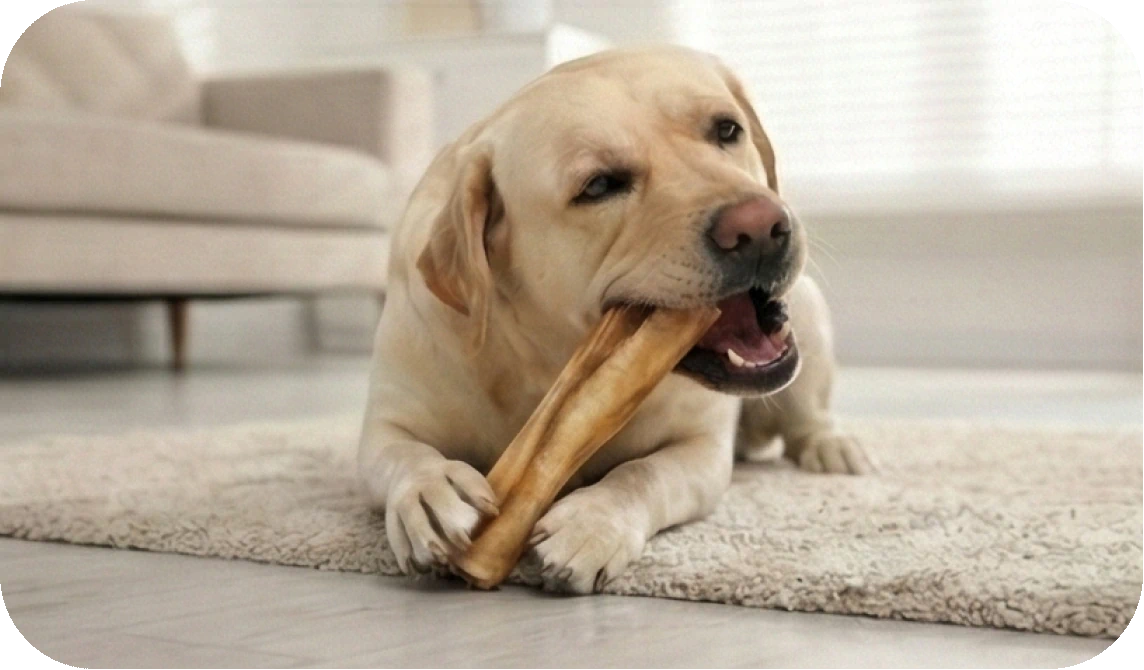
Discovering the Finest Dog Chews
The majority of people are aware that dogs have a tendency to chew. Chewing is a natural behavior for all dogs and serves various purposes. It allows them to explore their surroundings, exercise their jaws, and even clean their teeth. Most importantly, it stimulates them mentally and helps alleviate boredom.
However, when dogs don't have appropriate items to chew on, it can result in destructive chewing and other behavior issues. Providing a variety of chew toys for dogs is one way to satisfy their natural instinct to gnaw on things. Another option is to give them tasty, edible chews that fulfill their need to chew while also serving as a delicious treat.
Choosing the safest and healthiest chews for your dog can be challenging due to the wide range of options available in the market. While no dog chew is completely risk-free, some are healthier than others.
CAUTION
Always supervise your dog when they are chewing to prevent them from swallowing large pieces, which can lead to gastrointestinal blockage or cause injuries. Some chews can also result in broken teeth or oral injuries.
Avoid These Dog Chews
While there is no completely safe dog chew, certain chews pose a higher risk than others.
Chews that cannot be digested, such as hard plastic or nylon chews, are particularly dangerous. These chews have a high likelihood of causing gastrointestinal blockages or indigestion. Hard plastic or nylon dog chews are often too rigid, leading to potential tooth damage. Moreover, they develop sharp edges when chewed, which can result in injuries. Since these toys cannot be digested, they can obstruct the gastrointestinal tract or cause damage if swallowed.
Excessively hard chews should also be avoided. If you believe a chew is too tough for your dog to break into smaller pieces and swallow, then it is likely too hard for them to chew on. Very hard chews can lead to tooth fractures or oral injuries. As a general rule, if a chew would hurt if you banged it on your knee, it is too hard for your dog.
Animal hooves, antlers, and bones pose significant risks to your dog's teeth and gastrointestinal tract because of their hardness and indigestibility. If your dog doesn't break a tooth first, they could potentially snap off a piece and ingest it. Certain animal horns, such as buffalo or goat horns, soften and fray slightly while being chewed, making them less harmful to teeth and more easily tolerated by the gastrointestinal tract. However, they should still be used with extreme caution.
Rawhide chews are somewhat controversial. Although many dogs can handle rawhide without issues, it's important to note that large pieces of rawhide are not easily digested and can cause gastrointestinal blockages or irritation. Additionally, rawhide is often treated with potentially harmful chemicals. However, there are certain exceptions. Some types of rawhide are specially designed by veterinarians with safety and digestibility in mind. It is advisable to consult your vet for more information about safe rawhide chews that can help maintain clean teeth.
Dog Chews That Can Be Digested
In today's market, there are numerous chew options available for dogs that are considered safer due to their digestibility and tooth-friendly texture. However, it's important to note that even with digestible chews, large chunks can still lead to gastrointestinal upset or blockage. Therefore, it is crucial to supervise your dog while they are chewing, and if you notice them swallowing large pieces, it's best to remove the chew. Additionally, if your dog experiences symptoms like vomiting, diarrhea, or any signs of illness, it's advisable to consult a veterinarian immediately.
The advantage of digestible chews lies in their increased safety; however, they tend to have a shorter lifespan and are often more expensive compared to bones and hooves. To save money, you can try finding a balance between chew toys and edible chews. For dogs that are aggressive chewers, options like food-filled Kong Ultra, bully sticks, beef tracheas, or flavored dental chews may be suitable.
Bully sticks are currently among the most popular dog chews. They are made from beef pizzle (yes, that means penis), and they are dense, flavorful, and available in various sizes. Bully sticks are known for their durability, making them longer-lasting than many other safer chews. Dogs also enjoy the taste and texture of bully sticks. For aggressive chewers, braided bully sticks tend to last even longer. However, bully sticks can be a bit expensive, and they have a strong odor. It's also worth noting that some experts express concerns about potential bacterial contamination, so it's important to obtain bully sticks from reputable sources. Low odor bully sticks can be a good alternative to spare your sense of smell.
Beef tracheas, sometimes referred to as "windies" or "moo tubes," are primarily composed of cartilage and contain beneficial substances like glucosamine and chondroitin, which support joint health. These chews can last almost as long as bully sticks, although the duration can vary depending on the dog. Beef tracheas may be more expensive than bully sticks, but they don't have as strong of an odor.
When it comes to other animal parts used as chews, their safety can vary depending on the source. If you're unsure, it's best to consult your vet. As a general guideline, safer animal part chews include aortas, tendons, gullets, and tripe. Ears are more controversial as they have similar digestibility concerns as rawhide, and pig ears, in particular, tend to be high in fat. Some animal horns can soften when chewed, forming small, digestible pieces, but caution should be exercised when using them.
Flavored dental chews like Greenies or N-Bones are made from digestible ingredients such as wheat gluten, corn starch, and meat or poultry meal. While these chews are completely edible, they may not be suitable for dogs on strict grain-free diets due to allergies or owner preferences. It's worth noting that flavored dental chews are consumed quickly, especially by aggressive chewers.
How Long Does the Digestive Process Take in a Dog?
The complete digestion process, starting from the mouth and ending at the anal canal, has traditionally been estimated to take around 6 to 8 hours in dogs. However, certain studies propose that it may take up to 13 hours.1
It is believed that the digestive process in giant breed dogs could take significantly longer compared to smaller dogs, potentially ranging from 21.5 to over 57 hours.
These variations indicate that the duration of this process can vary significantly depending on factors such as the size and breed of the dog, health conditions, stress levels, type of food consumed, and other influencing factors.
It is important not to confuse the overall digestion process with the time it takes for food to pass out of the stomach. Many people often associate digestion with the time it takes for a dog's stomach to become empty, but this is not the same.
A dog's stomach can empty in as little as 1.5 hours, although some studies suggest that it is more likely to take between 4 and 10 hours, or closer to the commonly stated 6 to 8-hour digestion time for dogs. Again, this timeframe will vary depending on several factors, primarily the amount and consistency of the food consumed.
What Are the Best Chews for Your Dog?
Keep in mind that there is no universal chew that suits every dog. If your dog is overweight or has a sensitive stomach, it's advisable to opt for non-edible chew toys. For dogs that are healthy but picky, you may need to experiment with various types of chews until you find the one that suits them best. Dogs that are generally healthy and not too selective will likely enjoy a variety of chews. However, it's important to ensure that no treat or chew makes up more than approximately 10 percent of your dog's diet.