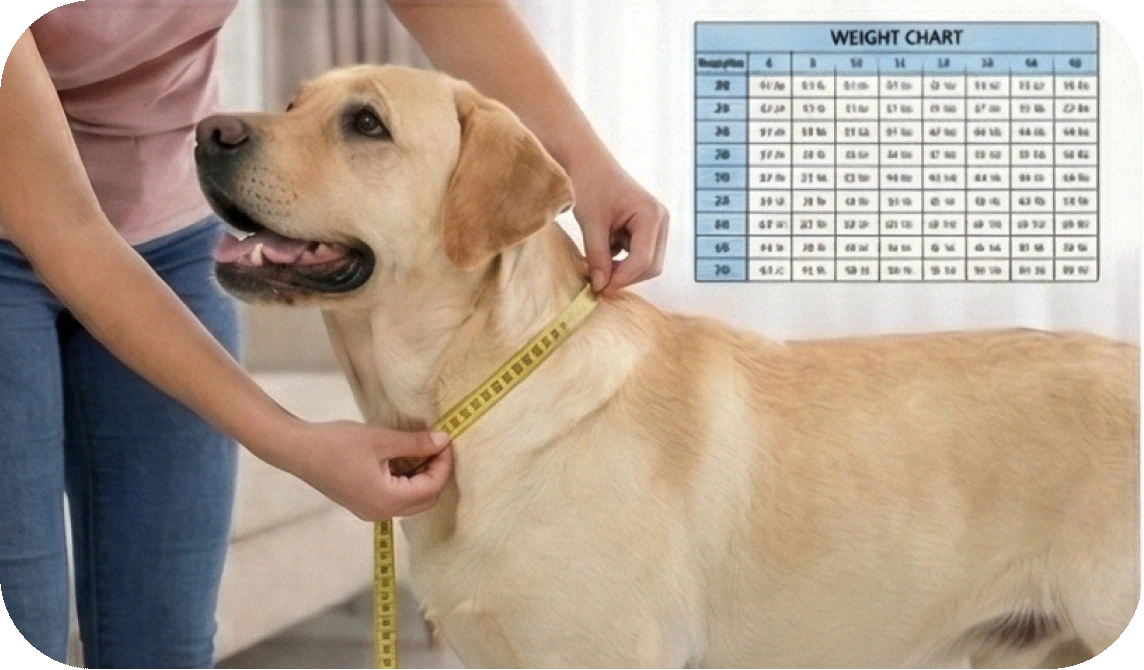
What Should Be the Ideal Weight for Your Dog?
It is estimated that 56% of dogs are overweight or obese, making obesity the most prevalent preventable condition among dogs. However, many pet owners may not consider obesity as a preventable disease or may be unaware that their own pet is overweight. As a responsible dog owner, it is crucial to understand the ideal weight for your dog. This is important because obesity can significantly increase the risk of various illnesses, including arthritis, liver disease, bladder and urinary disease, cardiac disease, hypertension, diabetes, and potentially cancer. In fact, obesity can reduce a dog's lifespan by 2.5 years!
How Much Should My Dog Weigh?
The American Kennel Club maintains a comprehensive table of recommended weights based on a dog's breed. This table can serve as a general reference for owners of purebred dogs. However, it's important to note that a dog's ideal weight is primarily influenced by its size, rather than its breed. For mixed-breed dogs, their ideal weight may not align with the ideal weight of their predominant breeds. Regardless of whether a dog is a purebred recognized by the AKC or a mixed breed, most veterinary professionals agree that the Body Condition Score is the most accurate method to determine if a dog is overweight, underweight, or at an ideal weight.
What Does Body Condition Score Mean?
The Body Condition Score (BCS) is a system used to evaluate the physical condition of a dog. Instead of solely considering weight or body mass index, like in humans, this scoring system assesses a dog's body condition based on physical characteristics. It typically employs a scale of 1-5, although some may use a scale of 1-9. The lower end of the scale indicates underweight, the higher end indicates overweight, and the middle represents an ideal weight. Using a BCS scale of 5, the characteristics that distinguish each grade are as follows:
1 – Very Thin: A dog with a BCS of 1/5 has minimal body fat. Their ribs, hip bones, and vertebrae are highly visible.
2 – Underweight: Dogs with a BCS of 2/5 still have limited body fat, with visible ribs. However, they may have more fat over their hips and spine, which reduces the prominence of these bony areas.
3 – Ideal: A dog with a BCS of 3/5 has an ideal body weight. Their ribs, hip bones, and vertebrae are not visible, but can be easily felt when touching them. When viewed from above, they should have a defined waistline behind the ribs before widening at the hips.
4 – Overweight: Dogs with a BCS of 4/5 have increased fat over their ribs and hips, making it slightly more difficult to feel the ribs. Some pressure may be required to feel them. The waist indentation behind the ribs may be less noticeable when viewed from above.
5 – Obese: A dog with a BCS of 5/5 has a significant layer of fat covering the ribs, making them very difficult or impossible to feel. They may also have excess fat over the hips, base of the tail, elbows, and knees. When viewed from above, there will be no waist indentation, and their silhouette will be straight from the ribs to the hips and hind end.
A BCS system that uses a 1-9 scale will have more subtle distinctions between the grades. However, for most pet owners, the 1-5 scale is easier to use and still provides a fairly accurate assessment of a dog's body condition.
It's important to note that different dog breeds have varying body conformations, which is why they can appear so different from one another. Breeds like greyhounds, whippets, and Italian greyhounds have a leaner build compared to stockier breeds like mastiffs and bulldogs. Additionally, some breeds have deeper chests than others. Breeds such as boxers, Doberman Pinschers, and greyhounds have deeper chests and will naturally have more abdominal tuck. Therefore, a greyhound with a BCS of 3/5 may have a more noticeable waistline than a mastiff with the same BCS, but both can still be considered to have an ideal body condition.
What Can I Do If My Dog Is Overweight or Obese?
So you have assessed your dog's Body Condition Score (BCS) and determined that they are either overweight or possibly obese. What can you do to address this issue? The easiest starting point is to reduce their daily food intake and gradually decrease their calorie intake. It is important to aim for a slow and gradual weight loss, as sudden and extreme weight loss can have serious medical consequences. If your dog is highly food motivated and you're concerned about reducing their food portion, you can substitute 15% of their daily dog food with high-fiber, low-calorie dog-safe foods, such as green beans or carrots.
Additionally, it is important to be mindful of treats and table scraps given throughout the day in addition to their regular meals, as these extras can quickly add up. Since treats are often used for training and bonding, you can still provide treats as long as you adjust your dog's total daily intake accordingly. For example, you can set aside 10-20 pieces of kibble from their regular meal and use them as treats throughout the day, ensuring you don't exceed their total intake.
There are also prescription diets and over-the-counter diets available that can help, depending on your dog's specific needs. Commercial dog foods labeled as 'light', 'lite', or 'low-calorie' have the largest reduction in calories compared to standard products, as regulated by the Association of American Feed Control Officials (AAFCO). Other terms used by pet food manufacturers to indicate reduced calorie or fat content may include 'less/reduced calorie', 'lean/low fat', or 'less/reduced fat', but the calorie reduction may not be as significant as those labeled 'light', 'lite', or 'low-calorie'. In cases where dogs are obese or have weight-related health issues, your veterinarian may recommend a prescription diet to closely monitor and control their weight loss. Your veterinarian can calculate the ideal caloric intake based on your dog's daily energy requirements to achieve safe and gradual weight loss.
Exercise is another crucial aspect of weight loss and improving your dog's overall health, but it must be approached gradually and with caution for overweight and obese dogs. Many of these dogs have weight-related health problems, such as arthritis or early joint instability, that may go unnoticed by their owners. Increasing their activity levels too rapidly can put them at risk of injuries. The best approach is to gradually increase their activity levels based on their current routine. This may involve adding just an extra five minutes of walking initially or gradually building up to an extra lap around the block. Other forms of exercise, like swimming, can also be beneficial for weight loss, but it is important to consult your veterinarian to determine what is safe and appropriate for your dog.
Determining the ideal weight for your dog can be challenging. If you are uncertain about your dog's body condition or if you suspect that you are either overfeeding or underfeeding them, it is recommended to consult your veterinarian for guidance.