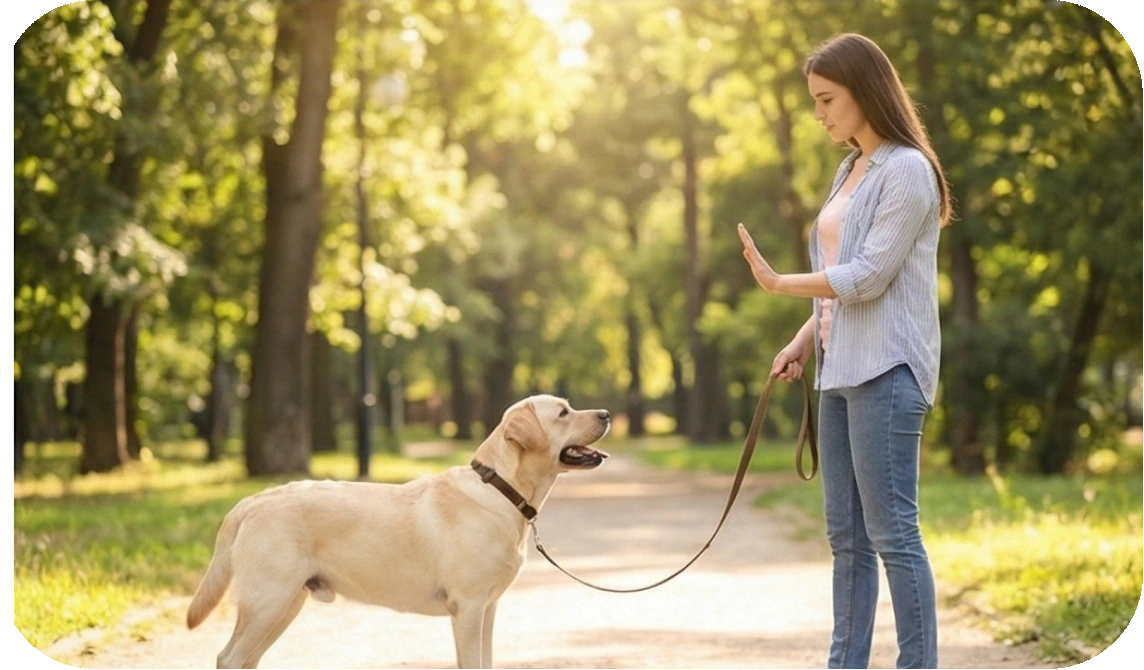
How to Leash Train a Dog That Pulls?
Multiple strategies exist to curb leash pulling in dogs. The "loose leash" method, a variant of the "heel" command, offers your dog a blend of guidance and freedom during walks. This approach aims for your dog to stay close without pulling, granting them liberty to explore and sniff within the leash's limits, enhancing the walking experience for both of you.
Positive reinforcement stands as the cornerstone of effective dog training. Rewards such as treats, affection, and praise are key to encouraging your dog's compliance with desired behaviors.
Choose the Best-Leash and Collar for Your Dog
For safety and control, leashing your dog is a must. A six-foot leash strikes a balance between control and freedom. The choice between a collar and a harness depends on your dog's breed, temperament, and health, with numerous options available for each. Avoid choke chains and prong collars to prevent potential injuries.
Teach Your Dog a Cue
Choose a consistent cue, like "with me" or "let's walk," to signal it's time for your dog to stay by your side. Use this cue consistently in tone and delivery to help your dog understand the expected behavior.
Training Methods
Dogs vary in their learning preferences, and the "stop and go" and "turn around" methods are popular techniques for teaching loose leash walking. Experiment with both to discover what resonates with your dog.
Stop and Go Method
Begin training by halting immediately if your dog starts to pull, conveying that pulling won't allow them to proceed. Resume walking once the pulling stops, reinforcing the cue to associate it with the desired slack-leash behavior.
Turn Around Method
For dogs that persist in pulling despite stops, try changing directions to disrupt their desired path. This teaches your dog to pay attention to your guidance and learn that pulling won't lead them to their goal. Persistent direction changes will eventually teach your dog the consequences of pulling.
Make It Rewarding and Fun
Leverage positive reinforcement to make staying by your side more appealing than distractions. Utilize treats, praise, and affection to motivate your dog, especially during the initial stages of training.
Common Problems to Avoid
Patience and consistency are vital in dog training. If progress seems slow, maintain your approach without resorting to negative reinforcement, which could hinder the learning process.
Vary training environments to enhance your dog's adaptability, starting in less distracting settings to build a solid foundation before gradually introducing more challenging situations.
By adopting these methods and maintaining a positive, patient approach, you and your dog can achieve enjoyable, stress-free walks on a loose leash.