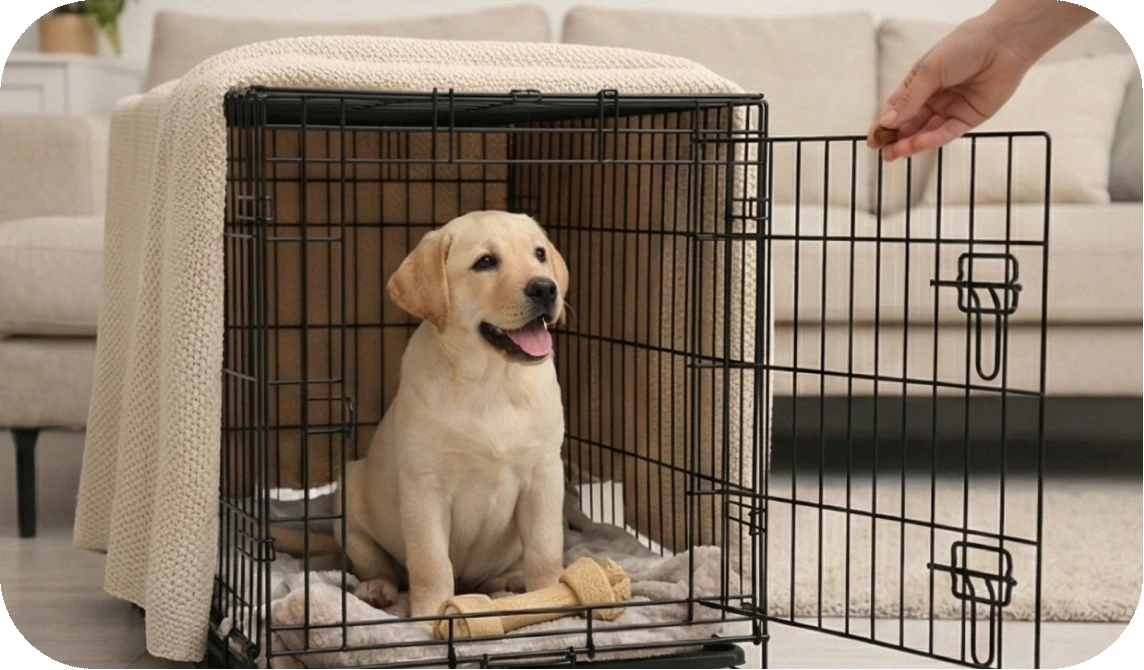
Crate Training Your Puppy
Crate training offers numerous advantages for both puppies and adult dogs, providing them with a secure and cozy space reminiscent of a den. For puppies, in particular, a crate can be a sanctuary where they feel safe. Properly introducing your dog to a crate and using it responsibly ensures it becomes a positive space, not just for overnight stays but also as part of effective potty training. Done correctly, crate training fosters a sense of security and structure for both you and your dog in the bustling world around you.
Consider the Goals of Crate Training
Crate training fulfills several key functions, enhancing both your life and your dog's. Familiarity with a crate from an early age should be an integral part of your puppy's training regimen.
- A crate serves as a comfortable bed and a private retreat for your puppy to escape from the hustle and bustle of household activity and other pets.
- It acts as a secure spot to gently confine your energetic puppy, keeping them safe when unsupervised.
- Crates are essential for safely transporting your dog in a car and for stays at the vet.
- They are invaluable tools for potty training, as dogs are naturally inclined to avoid soiling their sleeping area.
Choosing the Right Crate
The ideal crate should comfortably accommodate your puppy to stand, turn around, and lie down, but not so spacious that they can relieve themselves on one side and rest on the other. Consider your dog's anticipated adult size when selecting a crate to avoid frequent replacements. Adjustable crates or those that can be temporarily modified to suit a puppy's size are practical choices.
Crates come in various materials, each with its benefits. Hard plastic crates offer privacy and are airline-approved for travel, while wire crates provide excellent ventilation and visibility and can be easily stored. Soft-sided carriers are convenient for transport but may not withstand the chewing tendencies of some puppies.
Introducing the Crate
Make the crate an inviting space by incorporating it into your living area for your puppy to explore freely. Ensure the door remains open initially to allow for unhindered investigation.
Set Up the Crate
To create a positive association, furnish the crate with a comfortable blanket or bed and favorite toys. Consider a puzzle toy filled with a delicious treat to entice your puppy inside, turning the crate into a rewarding experience.
Teach Crate Tolerance
Introduce the crate with the treat toy inside, allowing your puppy to see and smell the treat but initially keeping them outside. This strategy demonstrates the crate as a source of delightful surprises. Gradually, let your puppy inside to enjoy the treat, increasing their crate time progressively while always associating it with positive experiences.
Gradually Increasing Crate Time
As your puppy becomes more accustomed to the crate, extend the time they spend inside with their treat toy, leaving the door open when not in active training to encourage voluntary crate visits.
Once your puppy views the crate as a normal part of their routine, you can relocate it to a more permanent spot in your home, ideally where they can still feel close to you.
Problems and Proofing Behavior
While many puppies will quickly take to crate training, some may need more time to adjust. Avoid using the crate as punishment, as this can create negative associations. If your puppy seems particularly resistant to the crate, consider trying a different type or location within your home to better suit their preferences. Some dogs may feel more at ease in wire crates for the visibility they provide, while others might prefer the seclusion of a plastic crate.