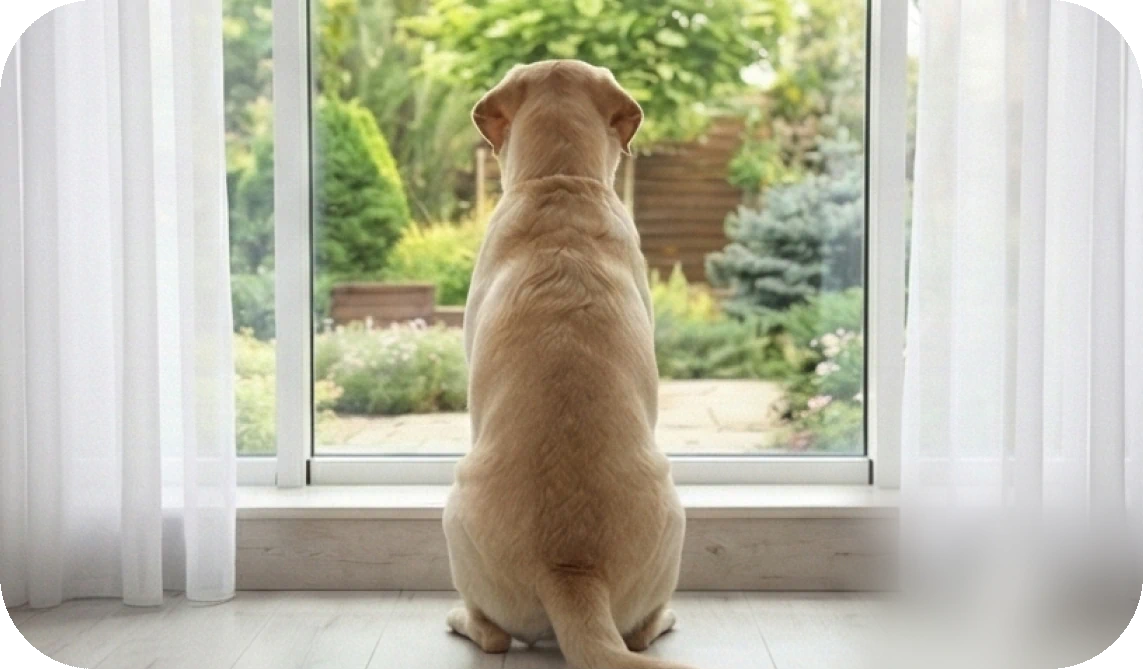
Tips for Teaching Your Dog to Stay
The "stay" command is a fundamental command that every dog should learn. It is almost as important as teaching them to come when called, as it can prevent them from getting into dangerous situations. Additionally, it allows you to keep your dog still and calm while you attend to household chores, entertain guests, or take them to public places.
Training your dog to follow the "stay" command is not very difficult. Consistent practice is key, with training sessions lasting five to ten minutes, two to three times a day. A successful "stay" is when your dog remains completely still in the original position. When starting the training, begin with short periods of one to two seconds and gradually increase the duration to several minutes.
Gather Supplies
Prior to starting, it is advisable to have a dog collar, an extra-long leash (preferably 15 to 30 feet), and training treats that your dog enjoys. This training can be applied to a dog that already understands the commands for sitting and/or lying down. If your dog is unfamiliar with these commands, it is recommended to go back and focus on teaching them first.
Prepare Your Dog
Put the collar and the leash that is longer than usual on your dog. As time goes on, you might not require the leash for the "stay" command, but it's advantageous to have it at the start in case your dog doesn't stay. Additionally, attaching the leash and collar can become a routine that signifies the start of training.
Give the Command
Instruct your dog to sit or lie down. If your dog is excited or restless, it might be more effective to begin with your dog in the lying down position. Use a firm and clear voice to say "stay" while raising one hand with the palm facing outwards (similar to a "stop" motion). If your dog remains still, reward them with a treat and give them praise.
Release and Repeat
To release your dog from the command, say "OK" and encourage the dog to start moving. Then, instruct your dog to sit or lie down once more and praise it when it follows the command. Repeat the word "stay" while making a hand motion and take a step or two back. If the dog remains in place, gradually walk towards it. It might be necessary to maintain the hand signal. If the dog continues to stay, reward it with a treat and praise. However, if the dog moves, restart the process from the beginning.
Add More Time and Distractions
Perform this procedure five to six times, progressively stepping farther away and lengthening the time interval between the commands "stay" and "OK." When your dog is able to maintain the stay position for 30 seconds or longer while on a long leash, start introducing distractions, altering the training locations, increasing the distance, and attempting to move out of your dog's line of sight while they remain in the stay position.
Problems and Proofing Behavior
Choose a training area free from distractions. If you don't have access to a backyard, avoid busy parks as they have too many distractions for your dog to concentrate on your commands. Instead, consider using an empty park (preferably in the morning) or ask a friend or neighbor if you can utilize their nearby yard for a peaceful and quiet environment. One common mistake is assuming that your dog understands a command after a few training sessions and trusting them to always obey it. Exercise caution with a newly trained dog, keep it on a leash, and avoid placing the dog in potentially dangerous situations by relying solely on its ability to stay, especially in places with numerous temptations.
Here are some tips:
Keep training sessions brief and try to conclude them on a positive note. If your dog is not yet able to stay, end the session with a command it already knows well, such as "sit."
Once you believe your dog has mastered the stay command, introduce distractions during practice sessions, such as squeaky toys or simulated door knocks.
When your dog becomes proficient at staying, you can reduce the frequency of treat rewards. Instead, offer occasional treats and primarily reward with verbal praise.