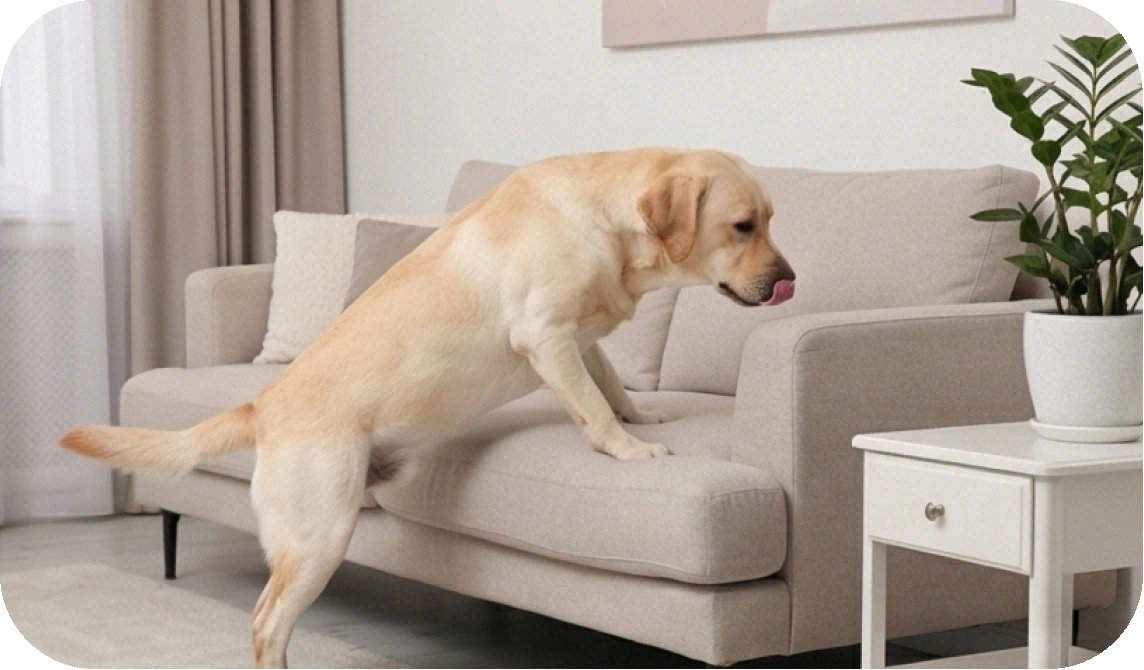
Why Do Dogs Lick Furniture?
Licking furniture is a behavior some dogs exhibit, often targeting softer household items like sofas, beds, and carpets. This habit can range from being harmless to quite bothersome, and it's usually rooted in psychological factors such as stress or anxiety, among other potential causes.
Top 5 Reasons Dog Lick Furniture
Boredom
Dogs, particularly the younger or more energetic ones, might resort to licking furniture out of boredom. This usually happens when they're left alone with excess energy and no outlet for it. Providing more mental and physical stimulation through interactive toys, longer walks, and engaging activities can help mitigate boredom-induced licking.
Stress
Temporary stressors like changes in the environment or routine can lead to furniture licking as a stress response. To help your dog cope with stress, consider incorporating more exercise, using calming supplements, or making environmental adjustments like using white noise machines during storms.
Anxiety
More persistent than transient stress, anxiety can cause ongoing furniture licking. Dogs with separation anxiety, for example, may lick objects as a self-soothing behavior. Addressing anxiety might require veterinary intervention for behavioral modification strategies or medications.
Obsessive-Compulsive Disorder (OCD)
In severe cases, a dog's compulsive licking of furniture and objects could indicate an underlying OCD. This condition requires professional veterinary care to manage.
Medical Issues
Sudden onset of furniture licking can sometimes signal underlying health problems such as pain, cognitive dysfunction, or gastrointestinal issues. Any abrupt change in behavior warrants a veterinary check-up.
Common Targets for Dog Licking
Dogs tend to favor softer, easily accessible items for licking, including their own bedding, household furniture like couches and carpets, and personal items such as blankets and towels.
Are Certain Dogs More Prone to Licking Furniture?
There's no specific breed, age, or gender predisposition for furniture licking. However, dogs with anxious tendencies or those experiencing prolonged periods of solitude or confinement may be more inclined to this behavior.
Strategies to Discourage Furniture Licking
Identifying the underlying cause is crucial in addressing furniture licking. For boredom-related issues, increasing engagement and exercise can be highly effective. Managing stress, providing a comforting environment, and ensuring your dog has access to suitable toys can also reduce this behavior.
For health-related concerns or persistent anxiety, consulting with a veterinarian is essential. They can offer guidance on medical treatments, behavioral therapies, and recommend professional trainers to help modify your dog's behavior.
Understanding and addressing the root cause of furniture licking can improve your dog's well-being and help maintain a harmonious living environment.